
4161

Adafruit
485-4161
4161

Mfr.:

Description:
Multiple Function Sensor Development Tools Adafruit VCNL4040 Proximity and Lux Sensor - STEMMA QT / Qwiic

In Stock: 42

Stock:
42 Can Dispatch Immediately
Factory Lead Time:
1 Week Estimated factory production time for quantities greater than shown.
Minimum: 1   Multiples: 1
Unit Price:
-,-- €
Ext. Price:
-,-- €
Est. Tariff:

Pricing (EUR)

Qty. Unit Price
Ext. Price
5,12 € 5,12 €

Product Attribute Attribute Value Select Attribute
Adafruit
Product Category: Multiple Function Sensor Development Tools
RoHS:  
Evaluation Boards
Proximity, Lux Sensor
VCNL4040
Brand: Adafruit
Dimensions: 25.3 mm x 17.8 mm x 4.6 mm
Product Type: Multiple Function Sensor Development Tools
Series: STEMMA
Factory Pack Quantity: 1
Subcategory: Development Tools
Unit Weight: 1,700 g
Products found:
To show similar products, select at least one checkbox
Select at least one checkbox above to show similar products in this category.
Attributes selected: 0

CAHTS:
8543700000
USHTS:
8543704500
JPHTS:
854370000
ECCN:
EAR99

VCNL4040 Evaluation Board

Adafruit VCNL4040 Evaluation Board is designed to evaluate the features and functionality of the VCNL4040 proximity and lux sensor. The VCNL4040 sensor is a 2-in-1 device featuring a proximity sensor that works from 0mm to 200mm and a light sensor ranging from 0.0125lux to 6553lux. The VCNL4040 is placed on a breakout board with support circuitry that allows the board to be used with 5V (Arduino/ Metro328) or 3.3V (Feather/Raspberry Pi) logic levels. This proximity/lux sensor uses an I2C interface to seamlessly connect it up with two wires (plus power and ground). The sensor includes the SparkFun Qwiic compatible STEMMA QT connectors for the I2C bus.

STEMMA Soil Sensor

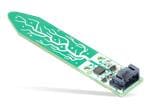
Adafruit STEMMA Soil Sensor offers a capacitive touch measurement system integrated into the ATSAMD10 microcontroller chip. The built-in feature allows the sensor to read from about 200 (very dry) to 2,000 (very wet). The STEMMA Soil Sensor's capacitive measurements use a single probe with no exposed metal, preventing probe oxidation. The probe also won't introduce DC currents into plants. It provides ambient temperature from the internal temperature sensor on the microcontroller via an I2C interface allowing it to be used with most microcontrollers.