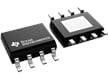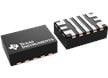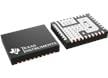


TPS61289RZPR

Texas Instruments
595-TPS61289RZPR
TPS61289RZPR

Mfr.:

Description:
Switching Voltage Regulators 26-V 20-A bi-directi onal buck-boost con

ECAD Model:
Download the free Library Loader to convert this file for your ECAD Tool. Learn more about the ECAD Model.

In Stock: 2.851

Stock:
2.851 Can Dispatch Immediately
Factory Lead Time:
12 Weeks Estimated factory production time for quantities greater than shown.
Minimum: 1   Multiples: 1
Unit Price:
-,-- €
Ext. Price:
-,-- €
Est. Tariff:
Packaging:
Full Reel (Order in multiples of 3000)

Pricing (EUR)

Qty. Unit Price
Ext. Price
Cut Tape / MouseReel™
2,19 € 2,19 €
1,63 € 16,30 €
1,50 € 37,50 €
1,34 € 134,00 €
1,26 € 315,00 €
1,22 € 610,00 €
1,19 € 1.190,00 €
Full Reel (Order in multiples of 3000)
1,14 € 3.420,00 €
1,11 € 6.660,00 €
† A MouseReel™ fee of 5,00 € will be added and calculated in your basket. All MouseReel™ orders are non-cancellable and non-returnable.

Product Attribute Attribute Value Select Attribute
Texas Instruments
Product Category: Switching Voltage Regulators
RoHS:  
SMD/SMT
VQFN-HR-14
Buck-Boost
20 A
1 Output
4.5 V
25 V
250 kHz
- 40 C
+ 125 C
TPS61289
Reel
Cut Tape
MouseReel
Brand: Texas Instruments
Input Voltage: 4.5 V to 25 V
Moisture Sensitive: Yes
Operating Supply Current: 1.5 uA
Product Type: Switching Voltage Regulators
Shutdown: Shutdown
Factory Pack Quantity: 3000
Subcategory: PMIC - Power Management ICs
Products found:
To show similar products, select at least one checkbox
Select at least one checkbox above to show similar products in this category.
Attributes selected: 0

This functionality requires JavaScript to be enabled.

USHTS:
8542390090
MXHTS:
8542399999
ECCN:
EAR99

TPS61289 20A Buck-Boost Converter

Texas Instruments TPS61289 20A Buck-Boost Converter is a bidirectional buck/boost synchronous converter that integrates the high-side synchronous rectifier MOSFET and uses an external low-side MOSFET. The TPS61289 can be configured as a buck or boost converter using the MODE pin. The TPS61289 can support a 20A switching current, and the VHIGH voltage supports up to 25V. The minimum VLOW voltage is determined by the VLOW/VHIGH ratio and frequency; for example, the VLOW voltage can support as low as 0.5V at the VHIGH = 15V condition. The device provides an excellent balance of efficiency, thermal dissipation, and solution size for high-power bidirectional conversion.