
ADL5205-EVALZ

Analog Devices
584-ADL5205-EVALZ
ADL5205-EVALZ

Mfr.:

Description:
RF Development Tools Eval Board

In Stock: 2

Stock:
2 Can Dispatch Immediately
Factory Lead Time:
10 Weeks Estimated factory production time for quantities greater than shown.
Minimum: 1   Multiples: 1
Unit Price:
-,-- €
Ext. Price:
-,-- €
Est. Tariff:
This Product Ships FREE

Pricing (EUR)

Qty. Unit Price
Ext. Price
186,12 € 186,12 €

Product Attribute Attribute Value Select Attribute
Analog Devices Inc.
Product Category: RF Development Tools
RoHS:  
Evaluation Boards
RF Amplifier
ADL5205
1.7 GHz
Brand: Analog Devices
Interface Type: SPI
Maximum Operating Temperature: + 85 C
Minimum Operating Temperature: - 40 C
Operating Supply Voltage: 3.3 V/5 V
Packaging: Bulk
Product Type: RF Development Tools
Series: ADL5205
Factory Pack Quantity: 1
Subcategory: Development Tools
Unit Weight: 50 g
Products found:
To show similar products, select at least one checkbox
Select at least one checkbox above to show similar products in this category.
Attributes selected: 0

Compliance Codes
TARIC:
8542399000
CNHTS:
8543709990
CAHTS:
8473302000
USHTS:
8473301180
JPHTS:
854239099
MXHTS:
8473300401
ECCN:
EAR99
Origin Classifications
Country of Origin:
United States
Assembly Country of Origin:
United States
Country of Diffusion:
Not available
The country is subject to change at the time of shipment.

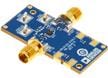
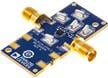
ADL5205-EVALZ Evaluation Board

Analog Devices ADL5205-EVALZ evaluation board helps the designer evaluate the features and capabilities of the ADL5205 amplifier. The board offers interfaces to the ADL5205 Dual DGA via serial and parallel interface ports. The board can also interface to the ADL5205 using the USB port on a Microsoft® Windows® PC via the system demonstration platform (SDP) interface board. In addition, toggle switches manually control of all the digital functions for the Dual DGA. A 3.3V low dropout (LDO) voltage regulator supplies the logic circuits when the device is running on a 5V supply. On-board baluns convert single-ended input signals to differential form for input to the device. The onboard baluns also convert the differential output signals of the device to a single-ended form for output.